
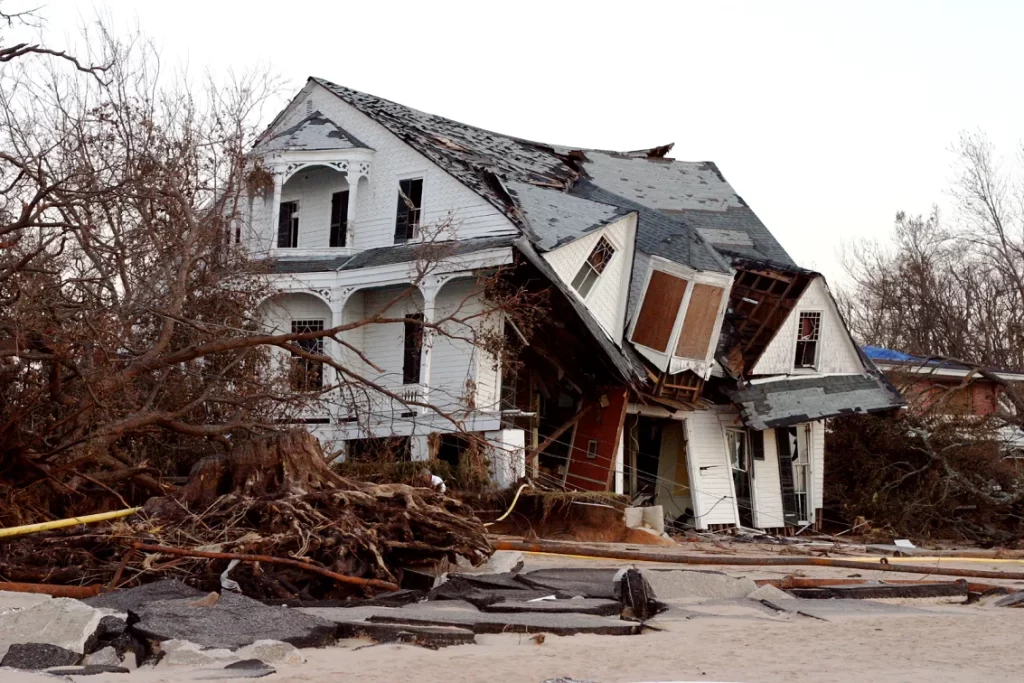
If you live along the east cost of the United States, then you must be familiar with hurricanes and their destructive power. Hurricanes are one of nature’s most powerful and destructive forces, capable of causing immense damage to homes and communities. If you live in an area prone to hurricanes, taking steps to protect your single-family home is essential to safeguarding your property and ensuring the safety of your family. Severe storms have the potential to cause extensive damage to homes, condominiums, and various other structures.
Maximizing efforts to maintain the integrity of your windows, doors, and roof is key to minimizing storm-related damage. This practice is referred to as safeguarding the “building envelope,” which involves preventing high-pressure winds from infiltrating through vulnerable points like broken windows, sliding glass doors, or any other openings. Any breach in the building envelope during a storm allows wind and wind-driven rain to enter the interior. Much of the observed damage to residential properties during major storms has resulted from the infiltration of high wind pressures through just one broken window, subsequently exerting force on the roof and causing it to be lifted off the structure.
In this comprehensive guide, we’ll explore various strategies and measures you can implement to minimize the impact of hurricanes on your home.

Understanding Hurricane Risks
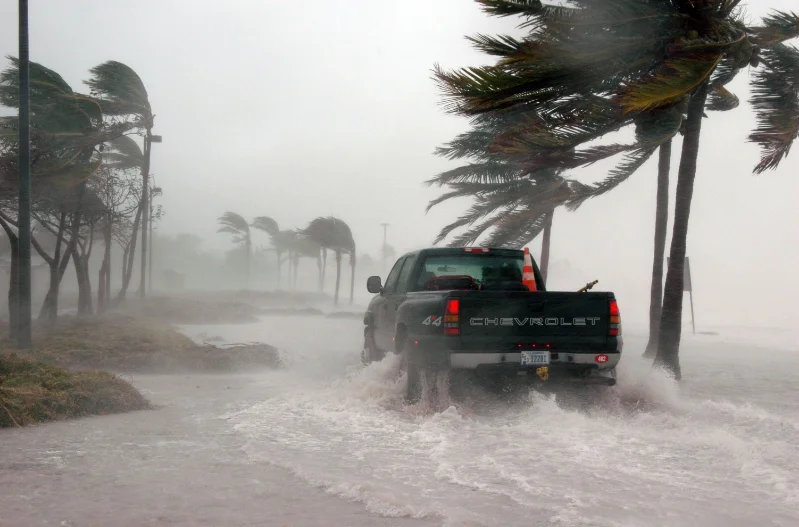
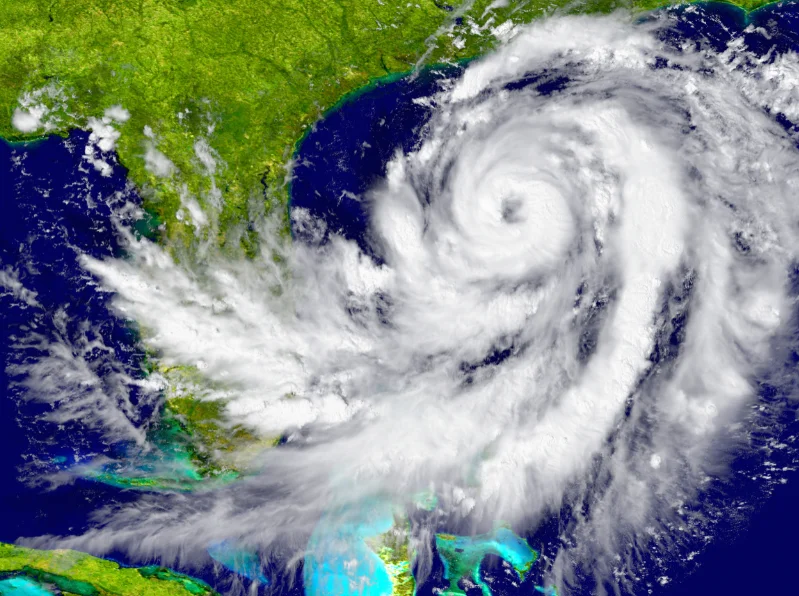
Before delving into protective measures, it’s crucial to understand the risks associated with hurricanes. These storms bring strong winds, heavy rainfall, storm surges, and flooding, all of which can lead to significant damage to homes. Coastal areas are particularly vulnerable, but hurricanes can also affect inland regions with strong winds and torrential rains.
Storm protection products deal with two main aspects:
- The primary concern for single-family homes and buildings up to three stories is the resistance to impact from flying debris such as coconuts, tree branches, and neighboring roof tiles.
- For taller buildings, the focus shifts to wind pressures and wind loads. Stay tuned for more on this topic in next week’s article discussing storm protection for condo buildings.
1. Strengthen Your Home's Structure
The first line of defense against hurricanes is ensuring that your home’s structure is strong and resilient. Consider the following measures:
- Roof Reinforcement: Have a professional inspect your roof and reinforce it with hurricane straps or clips to prevent it from being lifted off during strong winds.
- Windows and Doors: Install impact-resistant windows and doors or use hurricane shutters to protect them from flying debris and high winds.
- Garage Doors: Strengthen garage doors with braces or replace them with hurricane-resistant models to prevent them from collapsing under pressure.
- Foundation: Ensure that your home’s foundation is secure and properly anchored to withstand storm surges and flooding.
2. Maintain Your Property
Regular maintenance can go a long way in protecting your home from hurricane damage. Here are some maintenance tips:
- Trim Trees: Trim back overhanging branches and remove dead trees or limbs that could become projectiles during a storm.
- Secure Outdoor Items: Anchor outdoor furniture, grills, and other items that could become airborne in strong winds.
- Clear Gutters and Drains: Keep gutters, downspouts, and drains free of debris to prevent water from backing up and causing roof leaks or flooding.
- Inspect Roof and Siding: Check your roof and siding for any signs of damage or wear and repair them promptly to prevent water intrusion.
3. Create a Hurricane Preparedness Plan
Having a well-thought-out hurricane preparedness plan can make all the difference in protecting your home and family. Consider the following steps:
- Emergency Supplies: Stock up on essential supplies such as non-perishable food, water, flashlights, batteries, first aid kits, and medications.
- Evacuation Plan: Know your evacuation route and have a plan in place for where you will go if you need to evacuate.
- Communication Plan: Establish a communication plan with family members or neighbors in case of separation during a storm.
- Protect Important Documents: Keep important documents like insurance policies, identification, and financial records in a waterproof and portable container.
4. Invest in Flood Insurance
Flood damage is a common and costly consequence of hurricanes. Even if you’re not in a designated flood zone, purchasing flood insurance can provide financial protection against water damage to your home and belongings. Be sure to review your policy carefully to understand what is covered and consider purchasing additional coverage if needed.
5. Install Storm Shutters or Plywood
Protecting your windows and doors during a hurricane is crucial to prevent wind and water intrusion. Consider installing storm shutters, which provide a durable barrier against flying debris and high winds. If shutters are not an option, pre-cut plywood panels can be quickly installed to protect windows and doors.

6. Reinforce Garage Doors
Garage doors are often vulnerable during hurricanes and can fail under pressure, allowing wind and water to enter your home. Reinforce your garage doors with braces or install hurricane-resistant doors to minimize the risk of damage.
7. Elevate Electrical Systems
Elevating electrical systems, such as outlets, switches, and circuit breakers, can help prevent water damage and electrical fires during flooding. Consult with a professional to determine the best elevation height for your home’s electrical components.
8. Consider a Safe Room
If you live in a high-risk hurricane area, consider adding a safe room to your home. A safe room is a reinforced, interior space designed to withstand high winds and flying debris, providing a secure shelter for you and your family during a storm.
Florida was First to Mitigate this Problem
Following the extensive damage caused by Hurricane Andrew in Miami in August 1992, significant changes were made to storm protection products, building codes, and windstorm insurance coverage. These changes were accompanied by stringent regulations. Consequently, Dade County Product Approvals were established to guarantee that storm protection products and their installations meet precise standards. These standards are based on independent laboratory testing of every shutter, panel, or system that is marketed to the public as a method of safeguarding window or door openings from storm-related harm.
Since then, all building codes in Florida have integrated standards for storm protection products, originating from the initial Dade County product approval protocols of 1992-93. Every hurricane shutter and protection product sold in Florida must possess a Product Approval letter from the respective County or jurisdiction where it will be used. Manufacturers submit their product’s laboratory test outcomes to obtain a Notice of Acceptance (NOA) for each individual shutter, window, door, or other protection product.
The engineering and laboratory test results for each product are represented in terms of measured impact deflection (expressed in inches of “dent”) and design pressure (wind load in pounds per square foot). The testing procedures replicate potential flying object impacts and storm-generated wind pressures, with the tested product required to exhibit resistance to both.
Product Testing & Approval
A product’s test outcomes and Product Approval/NOA determine its appropriateness for installation on a particular opening of a specific structure (such as a house) under potential storm conditions for that specific geographic location.
For any installation of products marketed and sold as storm protection, a local Building Permit is mandatory. This process involves applying for the permit, obtaining it, and then closing it upon completion.
When the Building Permit is issued, it confirms that the product aligns with the applicable building code requirements for its intended use, as determined by its Product Approval/NOA. The final inspection conducted as part of the permit process ensures that the shutter, window, or door has been installed according to its design engineering as tested in the laboratory.
Many newer homes already feature impact-rated windows and doors, including garage doors. However, the options listed below may be seen as upgrades by owners of older homes, particularly those who wish to protect specific vulnerable openings with shutters on impact-rated windows or doors.
Before deciding whether to install or upgrade using any of these products, it’s advisable to consult with your insurance agent or company. They can inform you about potential premium savings resulting from reducing windstorm risk. Additionally, if you reside in an Association-governed community, make sure to first check with your HOA’s Board for any restrictions that may apply.
Hurricane-Proofing your Home
Ensure your home’s safety during a hurricane by installing impact-resistant windows and doors, and consider reinforcing your roof with hurricane straps or clips for added protection. Additionally, maintaining a well-maintained and secure garage door can also help prevent damage during high winds.
Here are some hurricane defense products that you can use to protect your home:
Storm Panels
These are the fundamental storm protection items available for purchase, which can be made from steel, aluminum, or polycarbonate materials. A track or collar section is installed above and below the window or door, with the overlapping panels fitting into these tracks and being securely fastened. Typically, the upper track is a U-channel, while the lower track utilizes individual wingnuts or clips for panel security.
The impact resistance of these panels decreases as their height increases, indicating that a taller panel will incur deeper dents compared to a shorter one.
- Benefits: Durable, with excellent impact resistance; also the most cost-effective option.
- Disadvantages: Installing and removing these items is a time-consuming process; they have sharp edges (use work gloves); it’s not recommended for second-floor openings; and the panels occupy storage space when not in use.
- Cost: $12 – $16 per square feet
- Effort to Use: High
Accordion Shutters
Accordion shutters are permanently affixed to the exterior wall and can be pushed to the sides of an opening when not in use, then pulled closed for protection. Constructed from extruded aluminum blades hinged together, they offer excellent protection and are much simpler to secure compared to Storm Panels because they slide and store on upper and lower tracks.
The latches and locks can be positioned either outside or inside, depending on the shutter’s location and ease of operation (shutters on the second floor and at least one ground-level entry door should latch and lock from the inside).
The impact resistance decreases with the height of the blades, meaning that a taller shutter will incur deeper dents than a shorter one.
- Benefits: Sturdy with excellent impact resistance; simple to open and close; suitable for use on any floor; no storage concerns; priced at a mid-level range.
- Disadvantages: The permanent installation could raise aesthetic concerns for the exterior appearance; it also requires time to pull closed and secure properly.
- Cost: $20-$25 per square feet
- Effort to Use: Medium

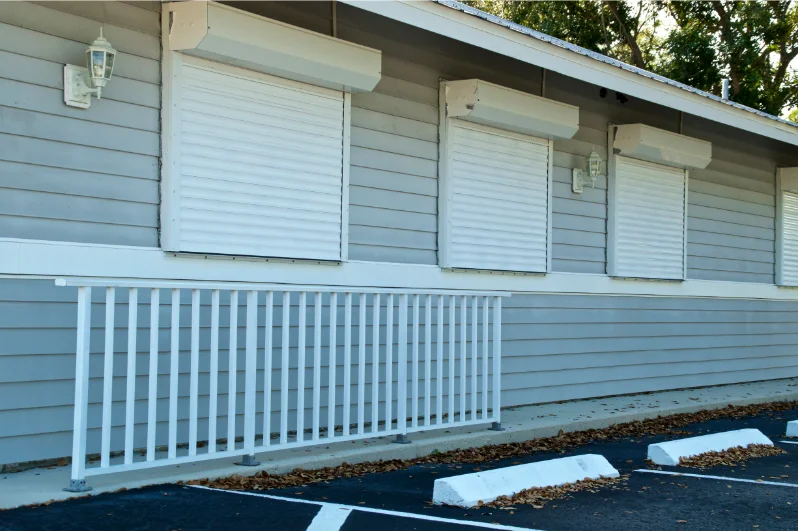
Rolldown Shutters
These storm protections are the simplest to use when a storm is on the way. They can be manually adjusted using an extension handle or by an electric motor, which is especially helpful for larger and heavier rolls.
Made from extruded aluminum slats connected by hinges, they come with a permanent upper housing that stores the entire shutter when not in use. When rolled down, the horizontal slats are secured by tracks on the sides of the opening.
For instances of power outages when using electric motors, it’s recommended to have manual overrides for some openings. Additionally, larger and heavier rolldowns may require reduction gears or spring assists, similar to garage doors, to make operation easier.
The impact resistance decreases with the width of the slats, meaning that a wider span of shutter will dent more deeply compared to a narrower one.
- Benefits: Simple to use and effective at securing openings; can also provide shade and enhance security.
- Disadvantages: A permanent installation could raise concerns regarding exterior aesthetics, and it typically comes with a higher cost compared to alternative options.
- Cost: $25-$60 per ft2
- Effort to Use: Low
Storm Screens
These storm protection products are relatively new but highly suitable for wider openings such as lanais and outdoor living spaces under a roof. They are crafted from a durable synthetic monofilament woven into a screen-like material, demonstrating excellent resistance to impacts and winds in open areas.
Due to their flexible nature, they are not typically recommended for installations directly in front of glass windows and doors (due to impact deflection considerations). They’ve gained popularity for safeguarding the outer openings of lanai/patio areas supported by ceilings and structural columns. Storm screens can be operated manually or with electric motors housed in the upper reel hood, similar to rolldown shutters.
Further reading: Why You’ll Benefit More Working with a Buyer’s Agent
- Benefits: Simple to use; capable of covering a large area with a single unit; suitable for providing both shade and security.
- Disadvantages: Not recommended for use on individual windows or doors; their cost falls within the same range as rolldowns.
- Cost: $12 per square feet
- Effort to Use: Low

Impact-Rated Windows & Doors
Instead of purchasing separate storm protection for their glass windows and doors, many homeowners in Florida opt to replace their older ones with newer, code-compliant impact-rated windows and doors, which are also specified for new construction projects. These products have all undergone rigorous independent laboratory testing to determine their impact resistance, enabling manufacturers to obtain Product Approval letters.
It’s important to note that valid building permits require the product’s engineering details and PA/NOA letter, just like the shutter products mentioned earlier.
In addition to their storm protection benefits, impact-rated windows and doors also provide improved insulation and energy savings compared to older code-compliant options.
Important: Impact-rated windows and doors are designed to withstand impact without shattering and creating openings for wind and rain to enter the living area. However, the glass can still break or crack under impact. It’s important to keep in mind the “building envelope” concept of protection. Additionally, the frames and installation methods are engineered to resist failure when struck by flying debris.
- Benefits: Comes with built-in protection; requires no labor as storms approach; aesthetically pleasing; energy-efficient.
- Disadvantages: Despite their higher cost, impact-rated windows and doors are still susceptible to breaking or cracking under impact.
- Cost: $1,200 to $1,600 per window
- Effort to Use: None
Never Become a Victim of Hurricanes Again
Protecting your single-family home from hurricanes requires a combination of structural enhancements, regular maintenance, preparedness planning, and insurance coverage. By implementing these measures and staying informed about risks of incoming hurricanes and evacuation procedures, you can minimize the impact of these powerful storms and keep your home and family safe. Remember, it’s better to be overprepared than caught off guard when facing the fury of a hurricane.