
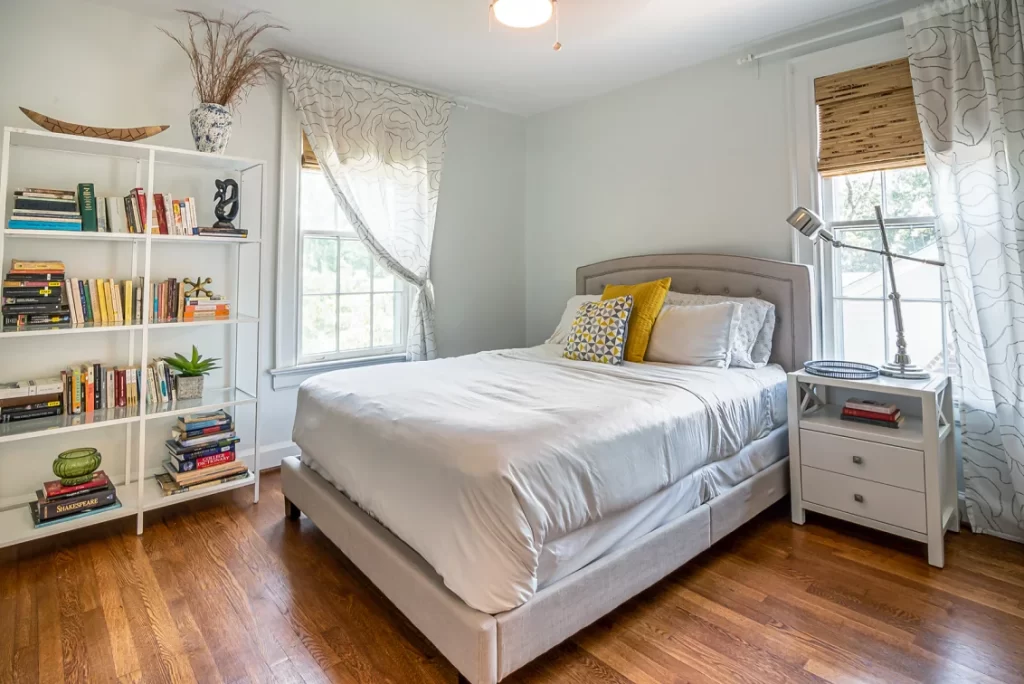
Designing and decorating your bedroom for maximum comfort and visual appeal can turn it into a personal sanctuary where you can unwind, recharge, and find inspiration. A well-designed bedroom not only promotes better sleep but also enhances your overall well-being. Let’s delve into the key aspects of designing, decorating, and ventilating your bedroom to create a harmonious and inviting space.

Designing Your Bedroom
Designing your bedroom is an opportunity to create a personalized sanctuary that reflects your unique style and promotes relaxation. Start by considering the layout and flow of the space, optimizing furniture placement for comfort and functionality. Choose a soothing color palette that sets the tone for relaxation, incorporating textures and patterns to add visual interest. Lighting plays a crucial role in ambiance; aim for a layered lighting scheme that includes ambient, task, and accent lighting. Finally, don’t forget about storage solutions to keep the space organized and clutter-free, allowing for a peaceful and restorative environment.
Layout and Space Utilization:
- Assess the available space and plan a layout that optimizes movement and functionality.
- Consider the placement of furniture such as the bed, nightstands, dressers, and seating areas to create a balanced flow.
- Ensure there’s ample space around the bed for easy access and to avoid a cluttered look.
Color Scheme:
- Choose a color palette that promotes relaxation and reflects your personal style. Soft, muted tones like pastels, neutrals, and earthy hues are ideal for a calming atmosphere.
- Incorporate pops of color through accent pieces like throw pillows, rugs, or artwork to add visual interest without overwhelming the space.

Lighting:
- Aim for a layered lighting scheme that includes ambient, task, and accent lighting.
- Install dimmer switches to adjust the light intensity according to your mood and activities.
- Utilize natural light by positioning your bed and seating areas near windows, and use sheer curtains to diffuse harsh sunlight.
Storage Solutions:
- Opt for multifunctional furniture like storage beds, nightstands with drawers, and floating shelves to maximize storage without sacrificing space.
- Declutter regularly and invest in organizers such as baskets, bins, and dividers to keep belongings neat and easily accessible.
Decorating Your Bedroom
Decorating your bedroom is a chance to infuse personality and warmth into the space, making it truly yours. Begin by selecting bedding and textiles that are not only comfortable but also complement your chosen color scheme and style. Add depth and character with wall decor such as artwork, mirrors, or tapestries, creating focal points that draw the eye and evoke emotions. Incorporate rugs and flooring materials that not only enhance the aesthetic appeal but also provide a soft and cozy feel underfoot. Finally, don’t forget to personalize the room with cherished mementos, indoor plants, or aromatic elements that contribute to a tranquil and inviting atmosphere.

Bedding and Textiles:
- Invest in high-quality bedding with comfortable sheets, duvets, and pillows to enhance sleep quality.
- Layer textures through throws, blankets, and cushions to add warmth and coziness to the room.
- Choose breathable fabrics like cotton, linen, or bamboo for a comfortable sleeping environment.
Wall Decor:
- Select artwork, photographs, or wall decals that resonate with your personality and contribute to the room’s aesthetic.
- Experiment with wall hangings, tapestries, or mirrors to create focal points and visually expand the space.
- Incorporate a statement wall with wallpaper, a bold paint color, or textured finishes for added visual impact.
Rugs and Flooring:
- Use area rugs to define different zones within the bedroom and add softness underfoot.
- Consider eco-friendly flooring options like bamboo, cork, or reclaimed wood for a sustainable and stylish touch.
- Ensure rugs and flooring materials are easy to clean and maintain for a hygienic environment.

Personal Touches:
- Display personal mementos, keepsakes, or collections that reflect your interests and memories.
- Incorporate indoor plants or fresh flowers to bring nature indoors and improve air quality.
- Include aromatherapy elements like scented candles, essential oil diffusers, or potpourri for a soothing ambiance.
Ventilating Your Bedroom
Ventilating your bedroom is essential for maintaining a healthy and comfortable environment conducive to restful sleep. Ensure proper air circulation by opening windows regularly to let fresh air in and remove indoor pollutants. Consider using ceiling fans or portable fans to improve airflow and regulate temperature, especially during warmer months. Invest in an air purifier with HEPA filters to remove allergens and enhance air quality. Additionally, control humidity levels with a humidifier or dehumidifier as needed to prevent mold growth and respiratory issues. By prioritizing ventilation, you create a refreshing and rejuvenating space that promotes overall well-being.
Air Circulation:
- Ensure proper air circulation by opening windows regularly to let fresh air in and remove stale odors.
- Use ceiling fans or portable fans to improve airflow and maintain a comfortable temperature.
- Invest in an air purifier with HEPA filters to reduce allergens, dust, and pollutants for better indoor air quality.

Climate Control:
- Install a programmable thermostat to regulate temperature levels and create a conducive sleep environment.
- Use curtains, blinds, or blackout shades to block out light and insulate the room, especially during extreme weather conditions.
- Consider adding a humidifier or dehumidifier to maintain optimal humidity levels for respiratory health and comfort.
Noise Reduction:
- Minimize external noise disturbances by sealing windows, doors, and gaps to create a quieter environment.
- Use sound-absorbing materials like rugs, curtains, upholstered furniture, or acoustic panels to reduce noise transmission within the room.
- Incorporate white noise machines or calming music to mask disruptive sounds and promote relaxation.
Minimum Square Foot for a Bedroom to be Considered “Comfortable”
The minimum square footage for a comfortable bedroom can vary depending on several factors, including the number of occupants, furniture size, and individual preferences. However, as a general guideline, a single-occupancy bedroom should ideally have a minimum of around 70 to 100 square feet to provide enough space for a bed, nightstand, dresser, and some walking room. For a master bedroom or a shared bedroom accommodating two people, a minimum of 120 to 150 square feet is recommended to ensure ample space for a larger bed, additional furniture, and comfortable movement within the room. These figures are approximate and can vary based on specific needs and design considerations.
By integrating these design, decoration, and ventilation strategies, you can transform your bedroom into a haven of comfort, style, and tranquility. Remember to personalize the space according to your preferences and prioritize functionality to achieve a balanced and inviting atmosphere that promotes restful sleep and enhances your overall well-being.

Conclusion
Designing a bedroom is like crafting a personalized sanctuary that reflects one’s style, preferences, and comfort. It begins with envisioning the atmosphere—whether it’s cozy and rustic or sleek and modern. Color schemes play a pivotal role, setting the mood and tying the elements together; soft, muted tones can create a serene ambiance, while bold colors add vibrancy. Furniture placement is crucial for functionality and flow, with the bed as the focal point for relaxation. Thoughtful touches like ambient lighting, plush textiles, and personal decor accents infuse character and warmth. Ultimately, designing a bedroom is about curating a space that fosters rest, rejuvenation, and personal expression.