
Shopping for a mortgage can be both exciting and daunting. It’s a significant financial decision that requires careful planning and consideration. Before diving into the mortgage market, taking the time to prepare can save you money, stress, and time. This comprehensive guide will walk you through the essential steps to get ready for your mortgage journey.
Know Your Finances
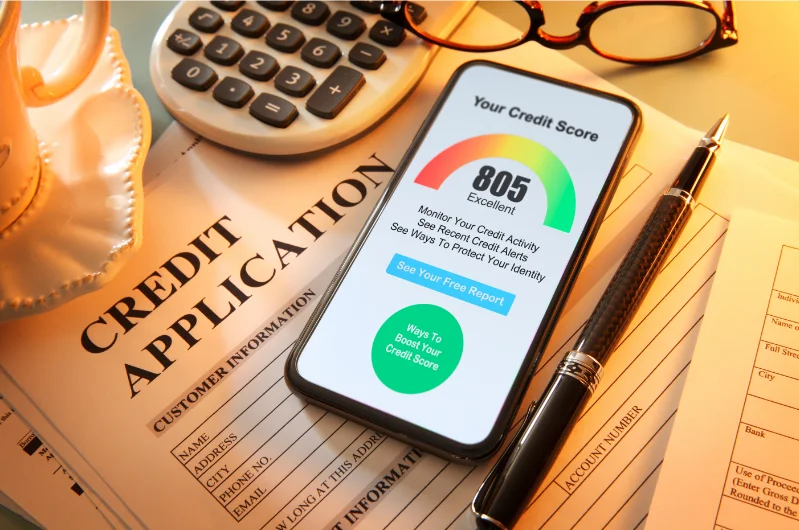
The first step in preparing for a mortgage is understanding your financial situation thoroughly. This includes knowing your credit score, assessing your debt-to-income ratio, and understanding your monthly cash flow. Your credit score plays a crucial role in determining the interest rate and loan options available to you. A higher credit score typically translates to lower interest rates and more favorable loan terms.
To improve your credit score, focus on paying bills on time, reducing outstanding debt, and avoiding new credit inquiries. Your debt-to-income ratio, which compares your monthly debt payments to your gross monthly income, should ideally be below 43% for most lenders to consider you for a mortgage.
Evaluate Your Budget
Before applying for a mortgage, it’s essential to evaluate your budget realistically. Consider your current expenses, including housing costs, utilities, insurance, transportation, groceries, and discretionary spending. Factor in potential changes in expenses once you become a homeowner, such as property taxes, homeowners’ insurance, maintenance costs, and possibly higher utility bills.
Creating a detailed budget allows you to determine how much you can comfortably afford to spend on a monthly mortgage payment. Remember that your mortgage payment includes not just the principal and interest but also property taxes, homeowners’ insurance, and possibly private mortgage insurance (PMI) if your down payment is less than 20 percent.
Save for a Down Payment and Closing Costs
One of the most significant financial hurdles when buying a home is the down payment and closing costs. A larger down payment can lower your monthly mortgage payments and reduce the amount of interest you pay over the life of the loan. Aim to save at least 20% of the home’s purchase price for a down payment to avoid paying PMI.
In addition to the down payment, you’ll need to budget for closing costs, which typically range from 2% to 5% of the home’s purchase price. These costs include loan origination fees, appraisal fees, title insurance, escrow fees, and attorney fees. Saving for both the down payment and closing costs in advance will make the home buying process smoother.

Get Pre-Approved for a Mortgage
Before you start house hunting, consider getting pre-approved for a mortgage. A pre-approval involves a lender reviewing your financial information and providing a conditional commitment for a specific loan amount. Having a pre-approval letter strengthens your offer when making an offer on a home, as it shows sellers that you’re a serious and qualified buyer.
To get pre-approved, you’ll need to provide documents such as pay stubs, tax returns, bank statements, and proof of assets and liabilities. The lender will also pull your credit report to assess your creditworthiness. Keep in mind that a pre-approval is not a guarantee of final loan approval but rather an initial step in the mortgage process.
Compare Mortgage Options
Once you’re pre-approved, it’s time to compare mortgage options from different lenders. Consider factors such as interest rates, loan terms (e.g., fixed-rate vs. adjustable-rate), closing costs, and lender reputation and customer service. Obtaining quotes from multiple lenders allows you to compare offers and negotiate for better terms.
When comparing mortgage options, pay attention to the Annual Percentage Rate (APR), which includes both the interest rate and any additional fees charged by the lender. A lower APR indicates a more affordable loan overall. Don’t hesitate to ask lenders questions about any terms or fees you don’t understand.
Understand Mortgage Types
There are several types of mortgages available, each with its pros and cons. The most common types include:
- Fixed-Rate Mortgage: The interest rate remains constant throughout the loan term, providing predictable monthly payments.
- Adjustable-Rate Mortgage (ARM): The interest rate can change periodically based on market conditions, potentially leading to lower initial rates but higher risk of payment fluctuations.
- FHA Loan: Insured by the Federal Housing Administration, these loans require a lower down payment (as low as 3.5%) but come with mortgage insurance premiums.
- VA Loan: Available to eligible veterans, active-duty service members, and certain military spouses, VA loans offer competitive interest rates and no down payment requirement.
- USDA Loan: Backed by the U.S. Department of Agriculture, USDA loans are designed for rural and suburban homebuyers with low to moderate incomes and offer low or no down payment options.
Each mortgage type has specific eligibility criteria, down payment requirements, and terms, so it’s essential to choose the one that best fits your financial situation and homeownership goals.
Gather Required Documents
As you move closer to finalizing your mortgage, gather all the required documents to streamline the process. Common documents include:
- Pay stubs or proof of income
- Tax returns and W-2 forms for the past two years
- Bank statements showing assets and liabilities
- Proof of down payment and funds for closing costs
- Documentation for any additional income (e.g., bonuses, rental income)
- Information on debts (e.g., credit card balances, auto loans)
Having these documents organized and readily available can expedite the loan approval process and prevent delays.
Review Loan Estimate and Closing Disclosure
Once you’ve selected a lender and loan program, you’ll receive a Loan Estimate (LE) detailing the loan terms, interest rate, monthly payments, closing costs, and any potential penalties or fees. Review the LE carefully to ensure everything aligns with what you discussed with the lender.
Before closing on your mortgage, you’ll receive a Closing Disclosure (CD) at least three business days before the closing date. The CD outlines the final loan terms, closing costs, and the amount of cash required to close. Compare the CD to the LE and ask your lender about any discrepancies or questions you may have.
Attend the Closing
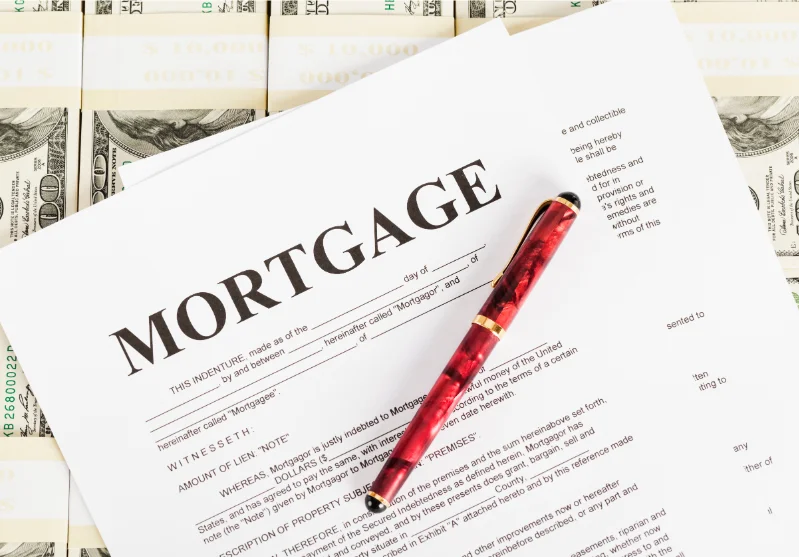
The final step in securing your mortgage is attending the closing meeting. This meeting typically takes place at a title company or attorney’s office and involves signing numerous documents, including the mortgage note, deed of trust or mortgage, and various disclosures.
Before the closing, review all the documents carefully and ask questions about anything you don’t understand. Bring a government-issued ID and any funds required for closing costs as specified in the Closing Disclosure. Once all documents are signed, and funds are transferred, you’ll receive the keys to your new home and officially become a homeowner.
Discover more of our blog with more real estate topics like this: Effective Strategies for Managing Financial Pressure During Home Purchases

Tips to Protecting Your Finances in Order to Obtain a Mortgage
- Get a second opinion (or third or fourth): Jump from one loan officer to another. You’re not obligated to commit to the first one you speak with. Each lender varies slightly, so it’s wise to seek out a company that aligns best with your requirements. Some may offer better rates, reduced origination fees, or superior communication. Don’t hesitate to ask me (your Realtor) for suggestions, along with seeking recommendations from friends and family who’ve had positive interactions with their lender.
- Be skeptical about “easy money”: If your credit isn’t stellar and a lender assures you that it won’t impact your interest rate, request written confirmation and seek a second opinion. The old saying, “if it sounds too good to be true…” likely holds true here.
- Make sure credit counseling is legitimate: Before consolidating any debt into a mortgage, ensure that you thoroughly verify all the information. Exercise caution with credit agencies, and do your research before making any decisions.
- Ask about all fees that are involved: It’s important to understand the upfront costs you’ll be required to pay. Are there processing fees? What is the loan origination fee? Will you need to pay for the appraisal upfront, or is it included in closing costs? Keep in mind, every lender varies in their fees. Typically, lenders charge a loan origination fee around 1% of the sales price, but I partner with a company that charges only $395.
- Are there prepayment penalty fees?: It’s been some time since I’ve come across these, but it’s worth inquiring with your loan officer about potential penalties for paying off your loan ahead of schedule.
- Look at the whole picture: Your loan officer should furnish you with a written overview detailing your interest rate for the duration of the loan and any expenses that will arise during closing.
- Make sure all documents are correct: It’s illegal to misrepresent any details when applying for a mortgage loan, including signing papers that the lender has altered on your behalf.
- Make sure all documents are complete: Do not sign documents with missing or blank dates, even if the loan officer assures you they will fill them in later.
Conclusion
Preparing to shop for your mortgage involves thorough financial planning, research, and careful consideration of your options. By knowing your finances, evaluating your budget, saving for a down payment, getting pre-approved, comparing mortgage options, understanding mortgage types, gathering required documents, reviewing loan estimates and closing disclosures, and attending the closing meeting, you can navigate the mortgage process confidently and successfully achieve your homeownership goals.