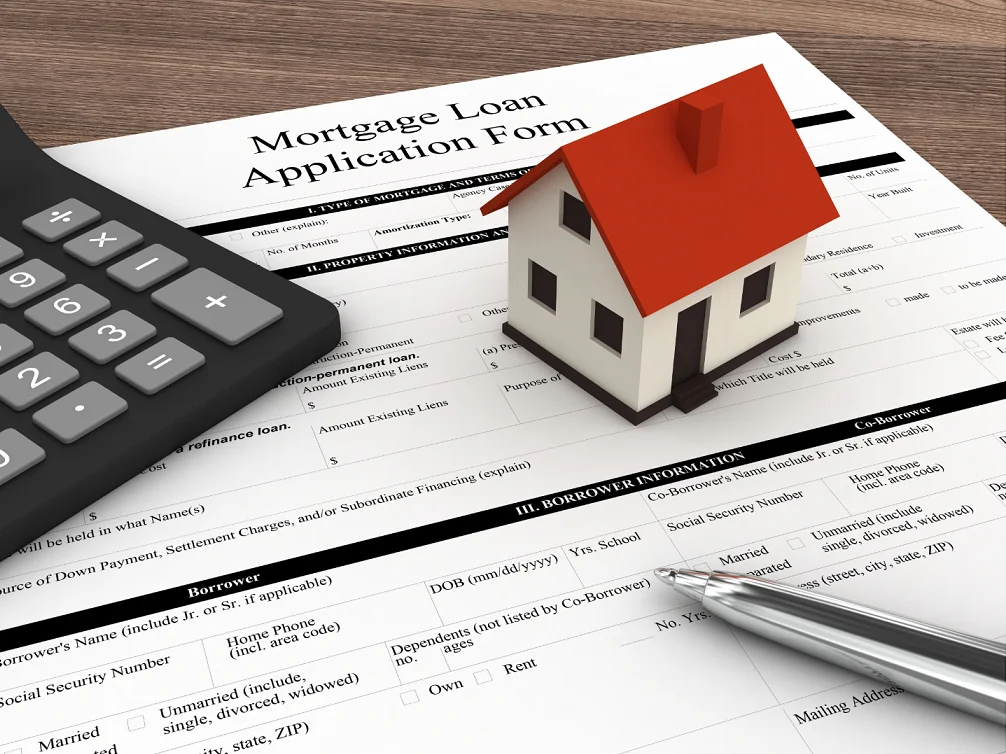
When it comes to purchasing a home, navigating the world of mortgages and housing loans can be a daunting task, especially when you have little knowledge about the various mortgage options. Understanding the different types of loans available is crucial for making informed decisions that align with your financial goals. In this article, we will explore various kinds of mortgages and housing loans, shedding light on their distinct features and benefits.
The Different Housing Mortgage Options

1.) Conventional Loans
A conventional loan is one of the many mortgage options and it refers to any mortgage that lacks federal government backing. Conventional loans impose stricter eligibility criteria, with a higher minimum credit score requirement, typically set at 620, making them more challenging to qualify for compared to government-backed mortgages. Borrowers contributing less than a 20% down payment are usually obligated to pay private mortgage insurance (PMI) on this type of mortgage loan.
The prevalent subtype of conventional mortgage is known as a conforming loan. Adhering to guidelines established by Fannie Mae and Freddie Mac, it is subject to annual adjustments in loan limits to accommodate fluctuations in home values. As of 2023, the conforming loan limit for a single-family home in most of the U.S. stands at $726,200.
Key features:
- Require a minimum 620 credit score
- Require borrowers to submit a comprehensive documentation detailing their income, employment history, credit standing, assets, and debts to facilitate the approval process
- Typically require PMI for a down payment of less than 20%
Pros:
- Applicable for a diverse range of acquisitions, spanning from a primary residence to an investment property
- If you’re able to reach 20% equity, then you don’t need to pay the PMI (Private Mortgage Insurance)
Cons:
- Must have at least a 3% down payment
- You must pay PMI if you make less than 20% down payment
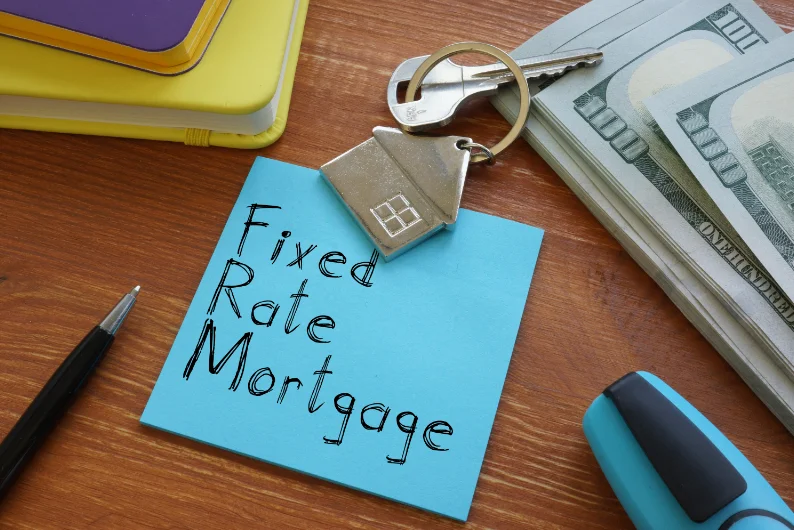
2.) Fixed-Rate Mortgages
A fixed-rate mortgage is precisely as its name implies—a home loan featuring a consistent mortgage interest rate throughout the entire duration of the loan. This is one of the many different kinds of mortgage options that appeals to a lot of first time homebuyers, especially the middle-class Americans. The interest rate specified on your closing disclosure remains unchanged for the entirety of the repayment term, unless you opt to refinance your mortgage.
Two prevalent fixed-rate alternatives are the 15- and 30-year mortgages. Diverging from certain types of mortgage loans with fluctuating rates, fixed-rate loans provide greater stability and predictability, facilitating improved budgeting for housing costs.
Key features:
- Includes a stable interest rate that remains unchanged throughout the duration of the loan
- Typically offered with repayment terms structured in five-year intervals, although certain lenders may provide the option to select custom loan durations
Pros:
- Your monthly payments for principal and interest will remain constant, as the interest rate remains unchanged
Cons:
- Opting for extended term lengths results in a higher overall interest payment
- Initially, the interest rates are higher compared to adjustable-rate mortgages (ARMs)

3.) Adjustable-Rate Mortgages
An adjustable-rate mortgage (ARM) is a category of mortgage options characterized by a variable interest rate that fluctuates throughout the repayment term instead of remaining constant. A popular variant of the ARM is the 5/1 ARM, classified as a hybrid mortgage due to its combination of a fixed-rate period and a subsequent period where the rate adjusts periodically.
In the case of a 5/1 ARM, the interest rate remains fixed for the initial five years and then undergoes annual adjustments for the remaining duration of the loan term. While ARMs commonly start with lower rates compared to fixed-rate loans, they have the potential to increase by as much as five percentage points above the fixed rate during the first adjustment period.
Key features:
- Include a variable rate that may fluctuate in response to market conditions
- Usually start with an initial mortgage rate lower than that of fixed-rate loans
- Feature a lifetime adjustment cap, typically limiting the variable rate from increasing by more than five percentage points throughout the loan’s duration
Pros:
- The monthly payments in the initial period will be more budget-friendly compared to those of a fixed-rate loan
- Can assist in reducing your overall interest payments substantially throughout the loan’s lifespan
Cons:
- This loan option carries higher risk as you commit to payment amounts that are not precisely known
- Should you plan to refinance or sell prior to the loan adjustment, encountering difficulties may arise if the home’s value decreases or the market experiences a downturn

4.) High-Balanced Loans
A high-balance loan falls under the category of conventional loans. Simply put, it is a loan with a balance surpassing the typical conforming loan limit. However, it retains its conforming status as it remains within the loan limit specified by the Federal Housing Finance Agency (FHFA) for areas acknowledged as high-cost.
For single-family homes in 2023, the high-balance loan limit stands at $1,089,300, constituting 150% of the aforementioned standard loan limit.
Key features:
- Follow the guidelines set forth by Fannie Mae and Freddie Mac
- Enable borrowers to obtain loans exceeding standard limits in counties with elevated costs
Pros:
- Makes conforming loans accessible to borrowers purchasing homes in particularly costly markets
- Frequently provides more favorable interest rates and lower down payment requirements compared to jumbo loans
Cons:
- Could entail higher interest rates compared to a standard conventional loan
- According to Fannie Mae guidelines, each co-borrower in a loan must possess a credit score
- Fannie Mae’s 3% down-payment loan options will not be accessible to you
- Applicable only in specified locations
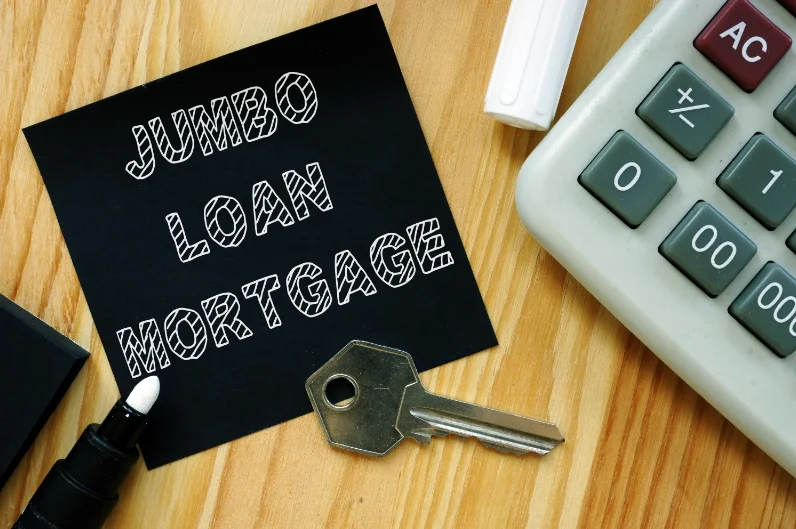
5.) Jumbo Loans
A jumbo mortgage, a subtype of conventional loans, is typically utilized for purchasing high-end residences. These loans surpass all conforming loan limits, necessitating a substantial down payment, often set at a minimum of 20%.
Distinguishing themselves from high-balance conforming loans, jumbo loans deviate from the guidelines established by Fannie Mae and Freddie Mac. Eligible borrowers may secure larger loan amounts with jumbo loans, potentially exceeding $1 million. You can choose to get this from the various mortgage options at your disposal provided you pass the basic requirements for the loan.
Over recent years, average jumbo mortgage rates have not exhibited significant differences compared to conforming conventional loans, remaining relatively consistent.
Key features:
- Allow for higher loan amounts, even if they surpass the thresholds set for conforming loans
- Impose more stringent criteria for credit scores and down payments compared to conforming loans
- Require a large down payment
Pros:
- Applicable to a diverse array of property categories
- The interest rates closely resemble those of conforming conventional loans
Cons:
- A greater upfront payment is necessary when utilizing it for a second home or investment property
- Require higher credit scores, usually ranging from 680 to 700 and beyond
6.) FHA Loans
These mortgage loans are backed by the Federal Housing Administration (FHA) and are tailored for borrowers facing credit challenges and limited funds for a down payment. To qualify for an FHA loan, a credit score of 580 and a minimum down payment of 3.5% are required. If your credit score falls between 500 and 579, a higher 10% down payment is necessary. As of 2022, the FHA loan limit for single-family homes is $420,680 in most U.S. counties, with an elevated limit of $970,800 in high-cost areas.
FHA loans come with obligatory mortgage insurance premiums. If your down payment is less than 10%, you are obligated to pay FHA mortgage insurance throughout the loan’s entire term, unless you opt to refinance into a conventional loan after achieving at least 20% equity. If your down payment is at least 10%, the mortgage insurance is required for 11 years. FHA loan is another type of mortgage options that many homebuyers apply for due to its obvious advantages.
Key features:
- Only necessitate a credit score of 580 to meet the eligibility criteria for the minimum down payment
- Include a mortgage insurance premium for the majority of borrowers
- Enable the purchase of a primary residence with up to four units, requiring only a 3.5% down payment (and a minimum credit score of 580)
Pros:
- Available to first-time and repeat buyers
- No income limits
- Easier to qualify for than conventional loans
Cons:
- Residence in the property is mandatory, even if other units are rented out
- The loan limits are less than what certain conventional loans may provide
- You’ll pay mortgage insurance premiums

7.) VA Loans
Members of the military, veterans, and eligible spouses have the potential to qualify for a loan supported by the U.S. Department of Veterans Affairs (VA).
In most instances, VA loans do not necessitate a down payment. Although the VA does not establish a specific minimum credit score requirement, VA lenders may typically look for a minimum credit score of 620. Furthermore, borrowers who have never utilized their VA loan benefits or have fully repaid their existing VA loans are no longer subject to loan limits imposed by the VA. One of the best mortgage options that the U.S. Government has provided for our war veterans.
Key features:
- Offer chances for military members, veterans, and eligible spouses to purchase a home
- Don’t require a down payment in most cases
Pros:
- No income or loan limits
- No mortgage insurance requirement
- Competitive interest rates
- Provides loans for the acquisition or construction of a home, renovation, or the purchase of a manufactured home
Cons:
- Must pay a VA funding fee
- It is necessary to employ appraisers approved by the VA, and if constructing a custom home, builders approved by the VA must be used

8.) USDA Loans
USDA loans, guaranteed by the U.S. Department of Agriculture (USDA), are designed for low- and moderate-income buyers seeking homes in specified rural areas. These home loans do not mandate a down payment or mortgage insurance, though there are income restrictions to qualify. The favorite among the mortgage options for the low-income homebuyers, which helps millions of people own a home.
Key features:
- Accommodate borrowers who wish to purchase homes in rural areas designated by the USDA
- Don’t require a down payment or mortgage insurance
Pros:
- Accessible for various types of homes, spanning from single-family homes and condos to modular and manufactured homes, as well as newly constructed homes
- No down payment
- No mortgage insurance
Cons:
- Certain USDA loans impose restrictions on the size and allowable amenities of the property
- The home must be your primary residence
- Must pay an annual guarantee fee
9.) Second Mortgages: Home Equity Loans and HELOCs
A second mortgage represents a distinct category of mortgage loan enabling you to borrow against the accumulated equity in your home over time. Much like a first mortgage, which is utilized for home purchase, a second mortgage is secured by your home. However, it holds a subordinate position to the first mortgage, signifying that repayment occurs after the first mortgage in the event of a foreclosure sale.
Two common forms of second mortgages are home equity loans and home equity lines of credit (HELOCs). A home equity loan involves a lump-sum amount, typically featuring a fixed interest rate and repaid in predetermined installments over a specified term. On the other hand, a HELOC functions as a revolving credit line with a variable rate, resembling the workings of a credit card. The funds can be utilized, repaid, and reused as long as access to the credit line remains open.
Key features:
- Enable borrowers to utilize their home equity for various purposes, such as debt consolidation or home improvement
- Include lump-sum and credit line options
- Utilize a borrower’s home as collateral, similar to a primary mortgage
Pros:
- Can be used to purchase or refinance a home
- Homeowners without a first mortgage, in certain cases, can utilize this
Cons:
- The rates and eligibility criteria are more rigorous compared to first mortgages
10.) Reverse Mortgages
Homeowners aged 62 and above may be eligible for a reverse mortgage, a unique type of mortgage distinct from the conventional “forward” home loan. Instead of you making payments to your lender, in a reverse mortgage, your lender disburses payments to you—utilizing your available equity—either as a lump sum or on a monthly basis.
The most prevalent form of reverse mortgage is the Home Equity Conversion Mortgage (HECM), which is backed by the FHA and carries various upfront and ongoing expenses. Similar to FHA loans, HECMs are subject to loan limits, with the maximum limit set at $1,089,300 for the year 2023. Repayment options for a reverse mortgage are diverse, allowing homeowners to consider selling their home or refinancing through a new, forward mortgage to settle the outstanding amount.
Key features:
- Postpone payments until the home is sold, or the borrower (or eligible surviving non-borrowing spouse) relocates or passes away
- Mandate that borrowers maintain a minimum of 50% equity in their home
- Mandate that borrowers (or surviving spouses) uphold the responsibility of maintaining the home, residing in it as their primary residence, and fulfilling obligations such as property tax and homeowners’ insurance payments
Pros:
- No income or DTI ratio requirements
- No monthly payments unless you move out of the house
- Income from the reverse mortgage payouts won’t be taxed
- Your heirs won’t inherit an underwater home
- You can pay off a first mortgage with the reverse mortgage
- You can use the funds to purchase a home
Cons:
- Qualification is determined based on the age of the younger spouse for married couples
- Neglecting proper house maintenance or failing to make timely payments for property taxes or home insurance may result in foreclosure
- Come with significant costs and fees including:
- Lender fees (up to $6,000)
- An upfront mortgage insurance premium equal to 2% of your home’s value
- Yearly mortgage insurance premiums equivalent to 0.5% of the loan amount