

The broader economy currently boasts nine million job openings, with government interventions aimed at reducing this number to eight million over the next four to five years, as part of efforts to recover from the pandemic-induced job losses.
Despite the anticipated significant impact of the AI revolution on productivity growth in the coming decade, labor remains the most pressing challenge for the housing sector in 2023 and 2024, as highlighted by Dr. Robert Dietz, the chief economist at the National Association of Home Builders.
Dr. Dietz underscores the imbalance in the construction industry, noting that for every five individuals leaving the sector, only three new entrants join. One strategy being pursued by the association to address this issue is advocating for immigration reform. This policy initiative complements the efforts of the association’s members and partners, who are actively developing new products, refining processes, and fostering collaborations to navigate these projections.
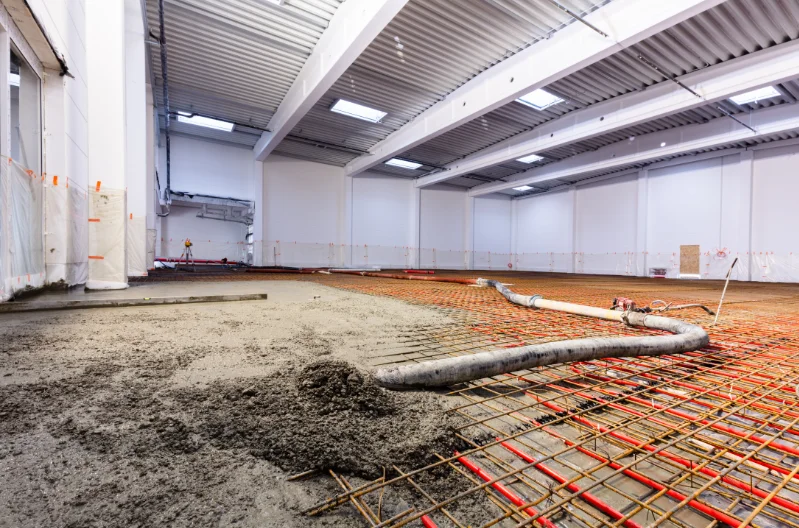
Floor Plan Details Printed into the Subfloor
New workers arriving at job sites often face a sink-or-swim scenario, particularly if English is their second language—a situation common among many laborers. The feeling of being lost, helpless, and uncomfortable can arise from a lack of understanding, communication barriers, or missing crucial information that seasoned laborers might take for granted.
Flashpoint Building Systems has revolutionized this dynamic by implementing laser printing technology to imprint the entire plan set and project details directly onto the subfloor. This innovation provides workers with real-life scale plans that eliminate communication obstacles between printed floor plans, site superintendents, and the laborers actively engaged in the construction process.
Flashpoint Building Systems’ integrated layout system was developed by its co-founders, Pat Churchman and Nick Stoppello, to address the challenges they encountered throughout their design and construction careers. Levi Smith, the CEO of Franklin Building Supply, recognized the potential of their solution and took steps to scout and incubate it. Smith is leading initiatives to infuse the housing construction sector with technology and innovation.
Since then, the startup has relocated its operations to Franklin’s lumber yard and expanded its reach, recently securing a project from one of the nation’s largest home builders. Flashpoint was chosen for a substantial community in Boise, featuring 111 new single-family homes. Before adopting Flashpoint’s innovation, the builder’s typical framing process for a 2,200-square-foot home took approximately 16 days. With the integrated layout system, this timeframe decreased to 10 days, marking a nearly 40% reduction in time.
Apart from the notable labor savings, the builder observed that the walls in the new projects were straighter, leading to less rework across all trades. Additionally, the trades involved in these projects reported having a clear understanding and expectation of how the home would come together.
“In construction, effective communication of scope is paramount,” noted Stoppello. “Miscommunication and misinterpretation of plans are widespread issues among those responsible for executing the work, resulting in a reactive, chaotic, and costly approach that leaves stakeholders dissatisfied.”
Flashpoint Building Systems represents a step towards full robotic construction capabilities and seamlessly integrates into existing workflows, offering time and cost savings. The next phase of Flashpoint’s expansion involves licensing software and equipment to customers in modified shipping containers, delivered either directly to home development sites or central distribution areas for laser printing and cutting. The first self-contained prototype is operational and scheduled for delivery to a construction community soon.

Free Training for New People in the Trades Sector
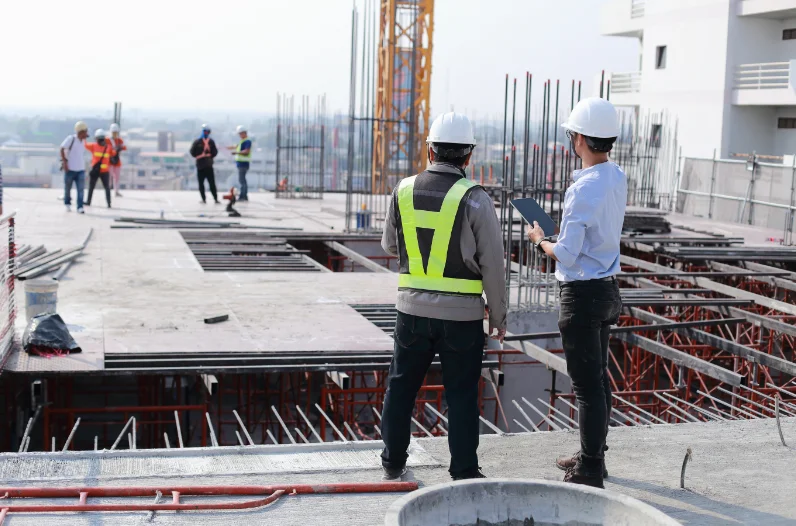
According to the Home Builders Institute, there is a significant gap in the trades sector, with only three new entrants for every five tradespeople who retire.
To address this challenge and foster workforce development, the institute, renowned for its leadership in the industry, is launching multiple training academies nationwide. These academies aim to provide comprehensive skills training to a fresh cohort of aspiring home builders.
In collaboration with esteemed partners like The BuildStrong Foundation, The Home Depot Foundation, and The Home Builders Association of Central Arizona, the institute is offering free construction trades training to individuals aged 18 and above. The training academies, currently operational in Orlando, Denver, New Orleans, and Houston, provide hands-on learning opportunities, allowing participants to transition from limited or no building experience to highly desirable job candidates within nine weeks.
Students enrolled in these programs benefit from ongoing mentorship throughout their training and receive job placement assistance upon program completion.
Labor’s Window of Opportunity
Many manufacturers refer to industry economic reports to anticipate the challenges their customers and distribution channels might encounter. One manufacturer tackled labor challenges through its research and development department, which worked to address these issues with their products.
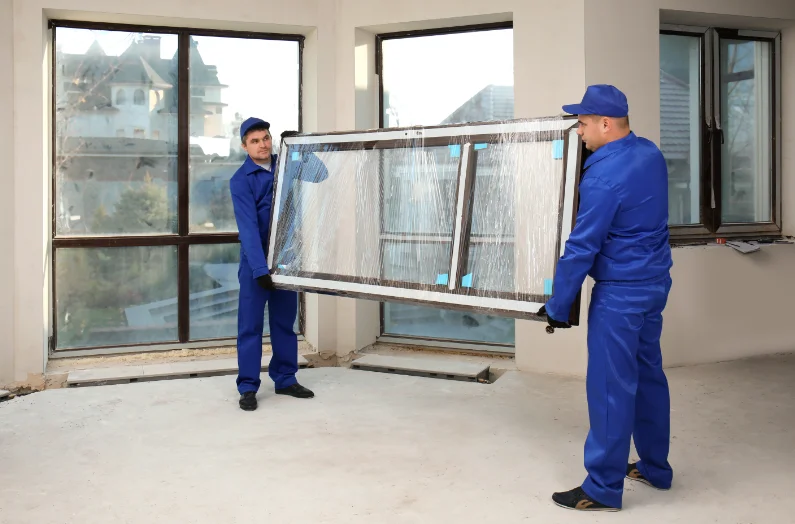
Keith Mann, Pella’s vice president of marketing, discussed this process during the launch of the new Steady Set interior installation system. This system can streamline the window installation process by eliminating the need for an additional worker and saving up to 60% of the installation time.
Mann posed a question to the audience during his presentation: “Can a window manufacturer prioritize installation?” He explained that their approach involved learning from customers and spending extensive time in the field to understand daily installation practices.
One key finding was that install crews spent 85% of their time passing window units from inside to outside. In response, Pella developed the industry’s first interior install system, known as Pella Steady Set.
Jenn Tuetken, Pella’s director of innovation and design, highlighted that Steady Set includes pre-attached components, reducing the number of parts installers need to manage on-site. It also features a built-in head stabilizer to secure the window during installation, minimizing the exterior work required, such as attaching the window from outside.

A live demonstration showed an installer completing interior work on a window in just 2.5 minutes. This installer then performed exterior tasks without needing additional fasteners or puncturing the weather barrier, completing the install in 3 minutes and 53 seconds compared to the regular process that took 7 minutes with 2 people.
For a 6’ x 6’ window, the regular installation required 5 laborers and took up to 87 minutes, while the Steady Set equivalent needed only 2 laborers and 26 minutes.
Tuetken emphasized that windows had not been designed with installers in mind until now, signaling a revolution in the window industry with a focus on simplicity.
Pella plans to introduce Steady Set across most of its rectangular wood window options in the upcoming summer. While exploring how Steady Set can benefit other product lines, they are initially concentrating on single-family new construction windows due to their complexity. Besides addressing labor challenges, the new system helps mitigate common water management issues with features like new sill shims that facilitate water escape, preventing moisture from accumulating behind the water-resistant barrier.
Recognizing that most training occurs on-site, Pella ensured that its innovation was easily adoptable. Steady Set windows feature QR codes for instant access to installation videos on the job site, along with instructions in English and Spanish directly on the units.

Critical Roles of Communication and Technology
The analysis by The Farnsworth Group on this year’s International Builder Show highlighted Pella’s launch of the Steady Set window and Flashpoint’s recognition as the most innovative construction product. According to the analysis, certain manufacturers, such as Pella, effectively introduced innovative solutions and effectively communicated their ties to labor efficiencies. Conversely, some manufacturers had labor-saving innovations but struggled with communicating their benefits, highlighting an important area for manufacturers to address and improve.
Grant Farnsworth from The Farnsworth Group emphasizes the responsibility of manufacturers and suppliers in addressing today’s labor challenges and time constraints. He also cautions that labor shortages can lead to broader implications, such as increased reliance on software and technology, indicating the need for manufacturers and service providers to adapt and prepare accordingly.
Regardless of how one looks at it, the labor challenge looms large. Every form of support will be crucial and can make a significant impact, and all stakeholders must play a part to avoid becoming obsolete.
Recommended blog post to read: Realtors Association Resolves Seismic Settlement, Removes 6% Home Commission
Revolutionary Technologies Will Change the Real Estate Sector Forever
New technologies and innovations are poised to significantly enhance the real estate industry across multiple fronts. The advent of artificial intelligence (AI) and machine learning algorithms is revolutionizing property valuation and market analysis, providing more accurate and data-driven insights for investors, developers, and buyers alike. Virtual reality (VR) and augmented reality (AR) technologies are transforming the way properties are marketed and showcased, offering immersive virtual tours that save time and enable remote viewing from anywhere in the world. More than that, Flashpoint Building Systems’ cutting-edge subfloor printing will be the future of construction and infrastructure building innovation. The free training for new recruits in the trades sector and the new communications methodologies in the construction business will definitely increase building construction time, making construction more efficient.