

There are many changes you can make to reduce the environmental impact your home and your daily life has on the planet. Even simple adjustments like using green cleaning products, finding ways to reuse your kitchen scraps, or locking your windows shut, can lead to less waste and energy savings. Whether you just bought a house in Miami, Los Angeles, or anywhere in between, here are some great ways to save energy, reduce your carbon footprint, and save money all from the comfort of your own home.
Rethink the Way You Approach Grocery Shopping
Adopt eco-friendly grocery shopping habits in order to save energy and reduce waste at home. Opting for a milk delivery service that uses reusable glass bottles, bringing your own bags to a bulk grocery store, and choosing glass or metal packaging can have a significant impact on minimizing plastic consumption. Incorporating these minor changes into your grocery shopping habits can have a notable impact on fostering sustainability in your household.
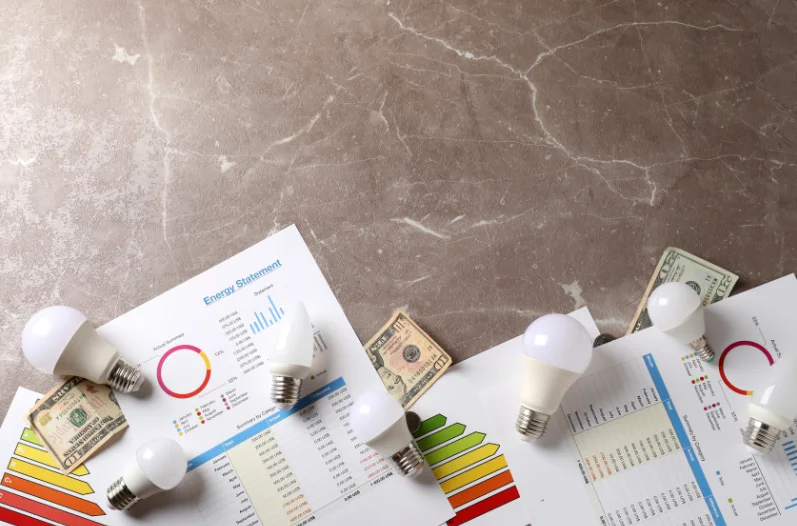
Use LED Lighting to Save Energy
Apart from enhancing the aesthetics of your home’s interior, adjusting the lighting can enhance your home’s efficiency and save energy by reducing your electrical energy consumption. Opting for LED bulbs, known for their superior energy efficiency, is a straightforward method to conserve energy throughout your home. An effortless do-it-yourself approach to energy conservation is to install LED lighting and adjust the thermostat by one to two degrees. Additionally, consider obtaining an energy audit and implementing basic, cost-effective retrofits to further enhance energy efficiency.
Reduce Your Household’s Water Consumption
An area where households commonly generate waste is water usage, with the average U.S. household utilizing over 300 gallons of water daily, much of which is avoidable. If you’re seeking ways to conserve water, merely being mindful of unnecessary water running can have a significant impact.
Reduce your daily water consumption at home by saving six liters of water per minute by turning off the tap while brushing your teeth. Opt for natural, biodegradable cleaning products free of chemicals, and consider installing taps and showers equipped with automatic shut-off features.
Use Smart Home Technology to Save Energy and Avoid Expensive Repairs
While technology has undoubtedly simplified our lives, it also offers the potential for monetary savings through the reduction of energy waste. Appliances equipped with sensors not only help prevent food and energy wastage but also notify homeowners of potential issues that, if overlooked, could result in significant costs.
The evolution of smart home systems will increasingly incorporate AI and machine learning to adapt to your habits and preferences in order to save energy and reduce household waste. By thoughtfully choosing and integrating suitable components for smart thermostats and HVAC systems, and ensuring optimal setup, you can turn your home into a center of energy efficiency.
Employing automation for lighting, temperature regulation, and window coverings stands out as the most economical method to minimize waste, effectively control, and conserve energy consumption within your home. Modern products seamlessly synchronize with circadian rhythms and the astronomical clock, offering personalized and precise customization.
Use a Solar Array to Cut on Costs and Help Save the Environment

Find Ways to Save and Reuse Your Produce
An excellent method to reduce food waste is to maximize the use of your leftover produce scraps. Extract additional value from your vegetables by utilizing the scraps to create a homemade vegetable broth.
Optimize the utilization of your produce by preserving vegetable scraps. When you’ve accumulated a half-gallon of scraps, boil five cups of water and incorporate your veggie scraps, one teaspoon of salt, and one teaspoon of black pepper. Simmer for an hour, strain the scraps, and you’ll have four cups of homemade vegetable broth ready for use in cooking, soups, curries, or stews.
Consider the Cleaning Products that You’re Using
When thinking about environmentally friendly cleaning products, biodegradable options may be the initial consideration. While these are commendable, you can take an additional step by completely eliminating plastic packaging.
Optimize space and remove plastic from your cleaning regimen by opting for USDA certified bio-based products. Explore options like detergent sheets and auto dish tabs that are entirely devoid of plastic, ensuring a more sustainable and eco-friendly approach.
Use the Air Conditioning Effectively
Whether you’re using the AC in the summer or warming your home during chilly winter months, the last thing you want is an inflated bill due to air leaks. Securing your windows not only fortifies your home but also preserves the conditioned air within – not to mention it helps save energy too.
Enhance energy efficiency in your home by ensuring your windows are securely locked. The lock serves not only for security but also to tightly seal the window along the weather-stripping. Remember, an unlocked window is essentially an open window.

Recycle Your Leftover Household Paint
If you find yourself with leftover paint following a recent home project, you might be contemplating the proper disposal method. Product Care Recycling advises against simply discarding old paint in the trash.
While a new paint job can rejuvenate your home, leftover paint, akin to other hazardous household items, should not be disposed of in regular trash. Recycling is the recommended approach to prevent soil and water contamination and divert waste from landfills.
Enrich Your Soil and Decrease Landfill Waste
Whether you’re tending to an existing home garden or aiming to contribute to environmental well-being, composting stands out as an excellent method to maximize the utility of your food waste. Both the planet and your plants will thank you.
Composting represents a highly impactful measure in diminishing household waste directed to landfills while generating a rich, natural resource that can greatly benefit your garden. In some cities, discounts on composters are even provided to promote and support this community-enriching practice.
Use Dimmable Indoor Lighting
Energy waste in the realm of home lighting is a common occurrence. Since most light bulbs function at full capacity when switched on, you may end up consuming more energy than necessary to illuminate your home, particularly during daylight hours. Opting for dimmable lights not only imparts a more natural glow to your home but also contributes to energy conservation.
For a substantial reduction in your electricity expenses, consider implementing a lighting control system or smart lighting. While accustomed to operating lights at 100 percent, the truth is that utilizing the full energy capacity of a bulb all the time is unnecessary. Dimmable LEDs not only enhance the living environment but also offer natural lighting that costs 20 to 50 percent less to operate compared to conventional switches. You essentially save energy when you use this kind of lighting indoors.